Episode 12Rebuild the journey
Rebuilding the whole request end to end
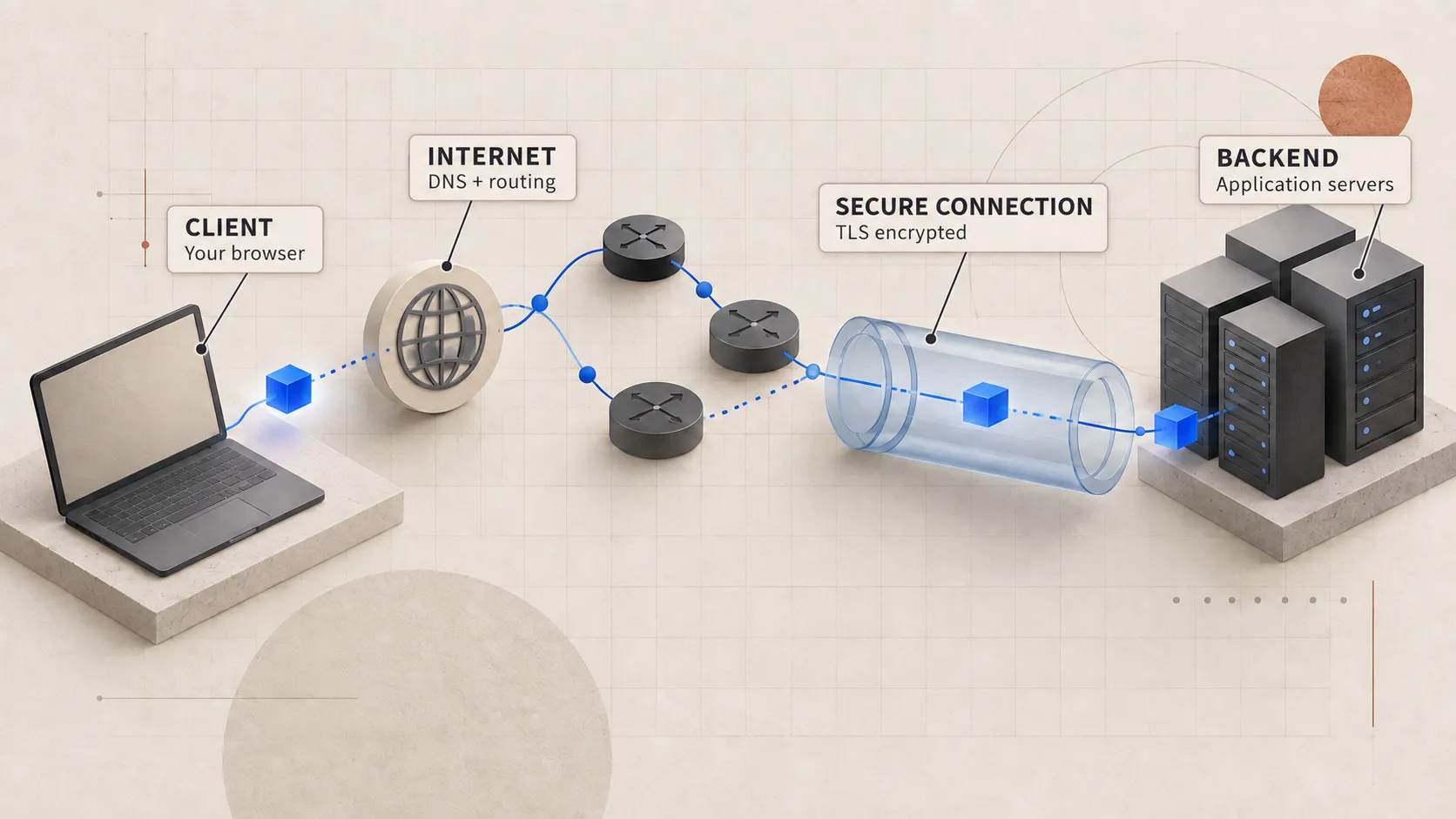
We put the full request back together, from the browser and network to Node, PostgreSQL, payments, queues, and the final response.
Read articleWe put the full request back together, from the browser and network to Node, PostgreSQL, payments, queues, and the final response.
Read articleA traffic spike fills queues, exhausts connection pools, hits hot rows, and turns careless retries into even more traffic.
Read articleThe request took 1.8 seconds. Traces, metrics, and logs help us see how much time each part of the system used.
Read articleA four-second payment call forces us to choose: keep the request open, or return a pending order and finish the work in the background.
Read articleTwo buyers see one item in stock. We need one safe place to decide who gets it and stop the other order.
Read articleA B-tree index helps PostgreSQL narrow millions of rows to a few candidates, as long as the index actually matches the query.
Read articleOne line of SQL hides a connection pool, a query plan, memory pages, MVCC rules, storage work, and a result that still has to come back.
Read articleNode handles many requests by keeping the JavaScript thread free while the operating system and supporting workers handle most of the waiting.
Read articleYour controller is near the end of the path. The operating system, Node's HTTP parser, middleware, and router all see the request first.
Read articleThe public endpoint is the front door. Load balancers, proxies, health checks, and routing rules still have to choose an application server.
Read articleBefore the browser sends a secure request, it has to verify the server, agree on keys, and work out which connection it can reuse.
Read articleBefore your backend can process an order, the browser has to find the service, open a connection, secure it, and get through the edge.
Read articleNo articles match this filter yet.